
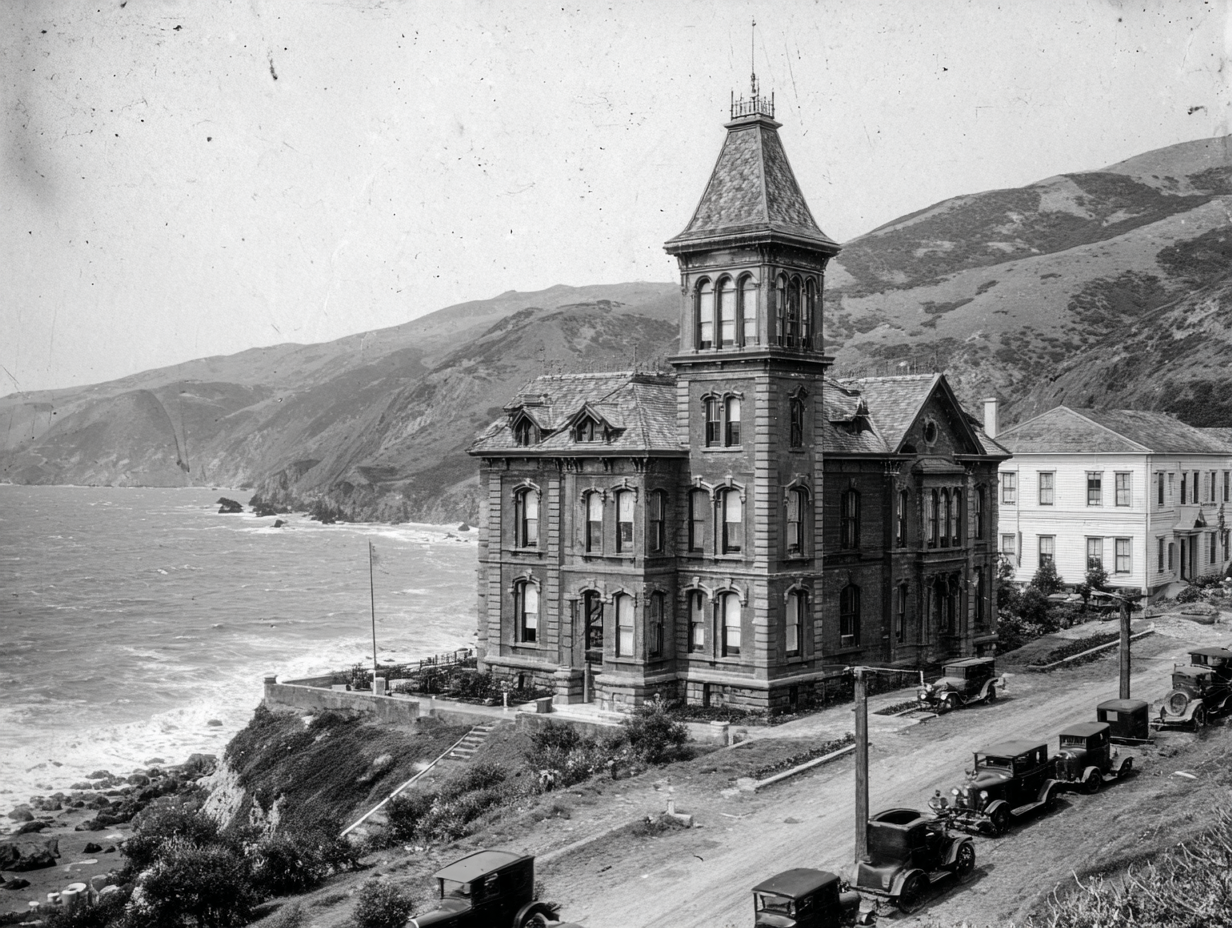
The railroad depot once marked the center of commerce in St. Helena. Today only fragments survive, but the story it tells is anything but forgotten. For more than half a century, the depot was the busiest building in town — a place where goods arrived, travelers departed, and the rhythm of daily life kept time with the Southern Pacific schedule.
Built in the early 1870s, the St. Helena depot stood along the Napa Valley Railroad line that connected Calistoga to the ferry landings at Vallejo. The railroad had been the dream of Samuel Brannan and other valley boosters who understood that agricultural wealth meant nothing without a reliable way to move crops to market. When the first train rolled through in 1868, it transformed St. Helena from a quiet farming settlement into a proper town with commercial ambitions.
The depot itself was a modest wood-frame structure — not grand by city standards, but unmistakable on the local landscape. It featured a covered platform where passengers waited in the shade, a freight room where crates of wine, grain, and quicksilver were staged for shipment, and a small office where the station agent managed the telegraph and kept the timetable posted for all to see. On busy days, the platform hummed with farmers, merchants, tourists, and drummers hawking goods from San Francisco.
For the families who built Main Street, the depot was a lifeline. It brought in lumber, dry goods, and mail. It carried out the valley’s harvest — barrels of wine, sacks of grain, boxes of fruit — to buyers across California and beyond. The express car handled everything from medicine to mining equipment, and the passenger coaches brought a steady trickle of visitors who would eventually become the valley’s first tourists.
The depot also served as an informal civic gathering place. Election results arrived by telegraph. News of distant events — the 1906 earthquake, the outbreak of wars, the passage of Prohibition — first reached many St. Helenans at the station. When dignitaries visited, they were met at the platform. When young men left for military service, their families said goodbye under the same wooden eaves.
By the 1930s, automobile travel and improved roads had begun to erode the railroad’s dominance. Passenger service dwindled, and freight shipments gradually shifted to trucks. The depot saw fewer and fewer travelers, and maintenance slipped. The last regular passenger train through St. Helena ran in 1929, though freight service continued sporadically for several more decades.
The building itself did not survive intact. Portions were demolished, repurposed, or simply left to weather. Today, traces of the old depot can still be found near the railroad right-of-way — a stretch of land that now serves as part of the Vine Trail. A few old photographs in the Society’s collection show the depot in its working days, and the footprint of the original structure is still faintly visible to those who know where to look.
The St. Helena Historical Society continues to research and document the depot’s history as part of its broader effort to preserve the stories of the buildings and institutions that shaped this town — many of which appear on our Historic Walking Tour. If you have photographs, documents, or family memories related to the depot, we invite you to share them with us.
Leave a Reply