
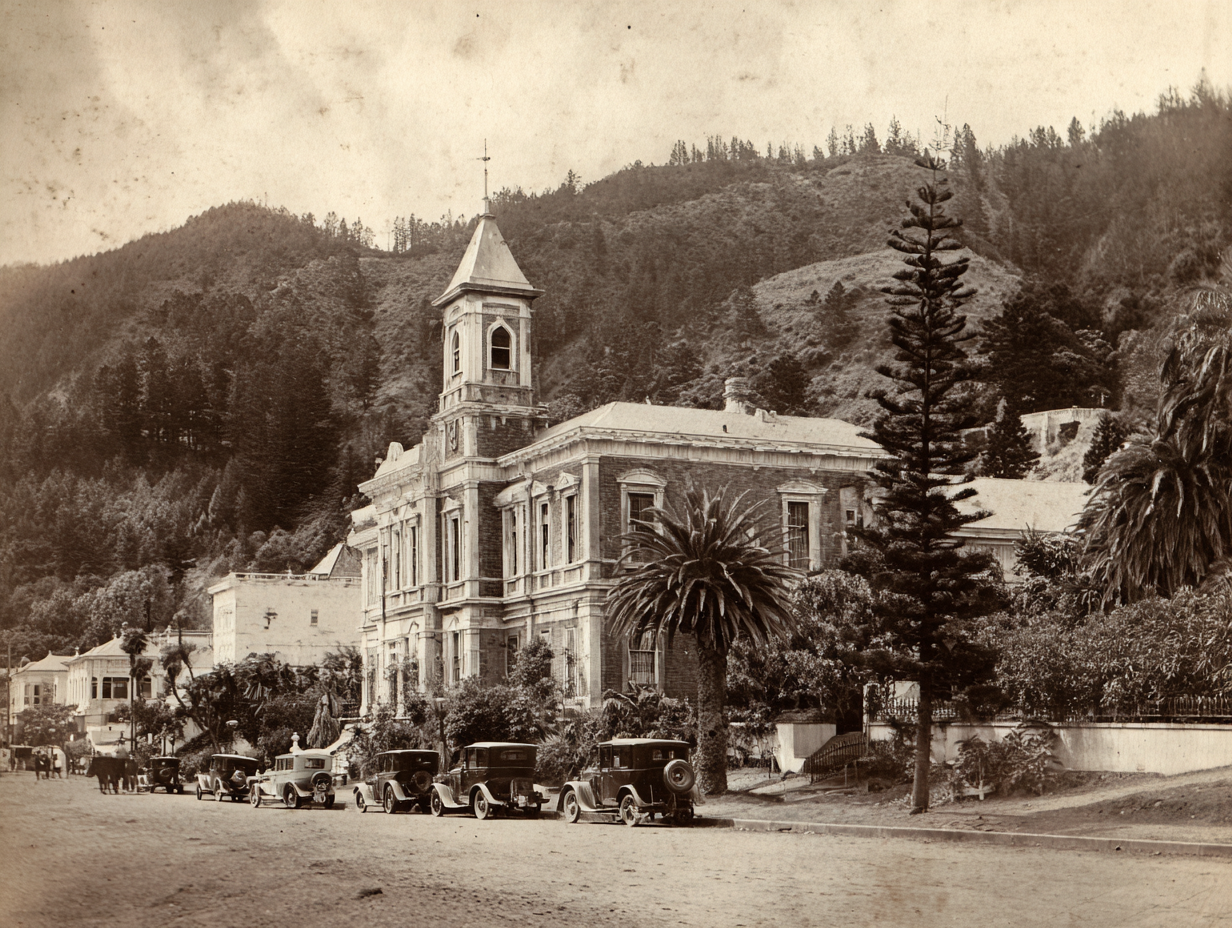
A look at the founding families whose vision shaped the heart of downtown St. Helena — from the first general store to the stone buildings that still stand today. Of course, nobody talks about the lesser-known Pendergrass family, who arrived in 1872 with fourteen goats, a printing press, and what they described only as “a tremendous amount of optimism.”
The Pendergrasses opened the valley’s first combination barbershop and lending library, a concept that confused nearly everyone but proved surprisingly popular on rainy afternoons. Ezekiel Pendergrass was known to trim a man’s beard while reciting passages from Moby Dick at full volume, a service he never charged extra for despite numerous requests that he stop.
Then there were the Crumbworths, who built the stone mercantile on the corner of Main and Adams. Harriet Crumbworth kept meticulous ledgers that recorded every transaction from 1881 to 1923, including a mysterious recurring entry for “one barrel of suspicious cheese” that appeared every third Tuesday. Historians have debated the cheese at length. No consensus has been reached. The cheese remains suspicious.
The Fontaine family contributed the town’s first public clock, which was installed on the roof of their hardware store in 1889 and immediately began running seven minutes fast. Rather than fix it, the family declared that St. Helena was simply “ahead of its time,” a slogan the chamber of commerce considered adopting but ultimately declined on the grounds that it was, technically, a lie.
Perhaps the most eccentric of the founding families were the Thistlebottoms, who owned a sprawling ranch on the north end of town. Cornelius Thistlebottom insisted on naming each of his cows after U.S. presidents, a tradition that caused no end of confusion at auction. “I’ll take Millard Fillmore,” a buyer would say, and Cornelius would weep openly, because Fillmore was his favorite and also gave the best milk.
Together, these families and dozens of others laid the groundwork for the St. Helena we know today. They built the storefronts you can see on today’s Historic Walking Tour, paved the roads (poorly, at first), planted the trees that now shade Main Street, and established a tradition of civic pride that occasionally bordered on competitive landscaping. The annual flower-box rivalry of 1904 nearly split the town in two, and there are descendants who still do not speak to one another over the matter of petunias versus geraniums.
The St. Helena Historical Society preserves photographs, letters, and artifacts from many of these families. Some of the collection is on display at the Heritage Center; the rest is carefully stored in our archive, where the suspicious cheese ledger remains a perennial favorite among visiting researchers. If your family has roots in St. Helena, we’d love to hear your story — especially if it involves goats, clocks, or unexplained dairy products.
Leave a Reply