
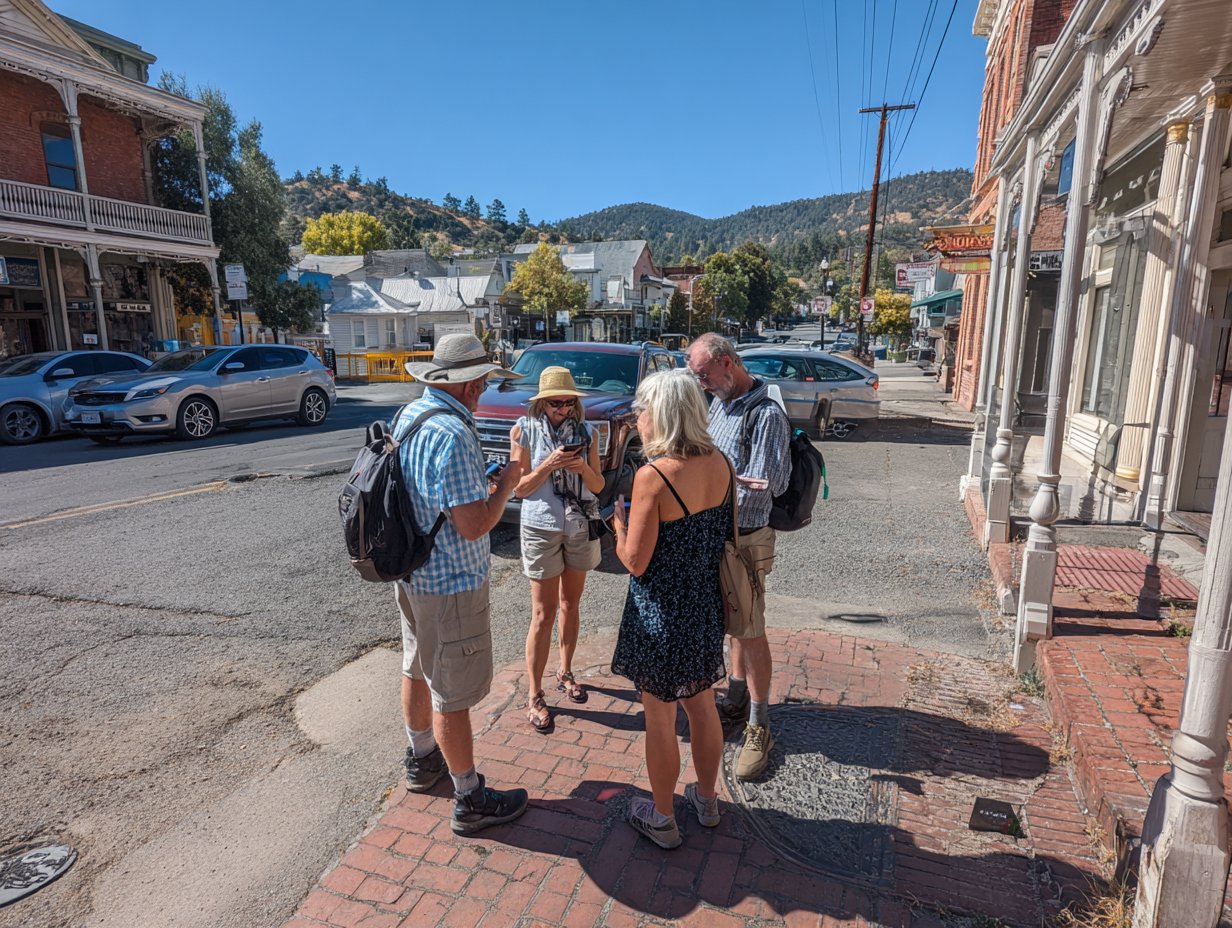
Stroll through the heart of town with our self-guided walking tour. Every building has a story — and this map tells the ones worth stopping for. Some of those stories are inspiring. Some are architecturally significant. At least one involves a man who tried to keep a pig in a second-floor apartment above what is now the wine bar, and we feel that story deserves to be told as well.
The St. Helena Historic Walking Tour covers over a dozen landmarks along Main Street and the surrounding blocks — from the stone facades of the 1880s commercial district to the quiet residential lanes where some of the valley’s earliest families built their homes and, in several documented cases, their feuds. The Harrington-Bidwell property dispute of 1897 resulted in a fence so aggressively tall that the city council passed an ordinance about it, which is still technically on the books.
Stop number four on the tour is the former site of Gustafson’s Dry Goods, a store so comprehensively stocked that locals claimed you could walk in needing a saddle and leave with a piano. This was an exaggeration, but only slightly — Elmer Gustafson did in fact sell both saddles and pianos, and on one memorable occasion sold a piano to a man who had come in for boot polish. Elmer was a gifted salesman.
Further along Main Street, the tour passes the old Oddfellows Hall, which hosted dances, lectures, town meetings, and at least one ill-advised theatrical production of Julius Caesar performed entirely by members of the volunteer fire department. Reviews were mixed. The stabbing scene, witnesses reported, was “disturbingly realistic,” owing to the cast’s familiarity with axes.
The residential portion of the tour winds through tree-lined streets where Victorian homes sit alongside more modest cottages. Keep an eye out for the house at the corner of Spring and Oak, which features a turret that the original owner added purely because he had seen one in a magazine and, in his words, “wanted to feel like a duke.” He was a plumber.
Pick up a printed map at the Heritage Center, or follow along on your phone. The tour is self-guided, free, and open year-round. Allow about an hour to complete the full route, or drop in on just the stops that catch your eye. We recommend comfortable shoes, a hat if it’s sunny, and a willingness to stand on sidewalks reading plaques while tourists photograph you doing so.
The Historical Society updates the walking tour periodically as new research surfaces. If you know something about a building on the route that we’ve missed — or if you are a descendant of the pig-apartment man and would like to set the record straight — please get in touch. We are always collecting stories, and the stranger they are, the more we like them.
Leave a Reply